
International week: innovative teaching through simulation
During our recent International Week, the Institute reaffirmed its ongoing commitment to pedagogical innovation and excellence. This initiative is fully aligned with our mission to provide physiotherapy education that is reflective, evidence-based, and globally engaged.
Thanks to the Erasmus+ program and our fruitful partnership with HELB, we had the privilege of welcoming Thierry Pastur, a physiotherapist, senior lecturer, and expert trainer in simulation-based education.


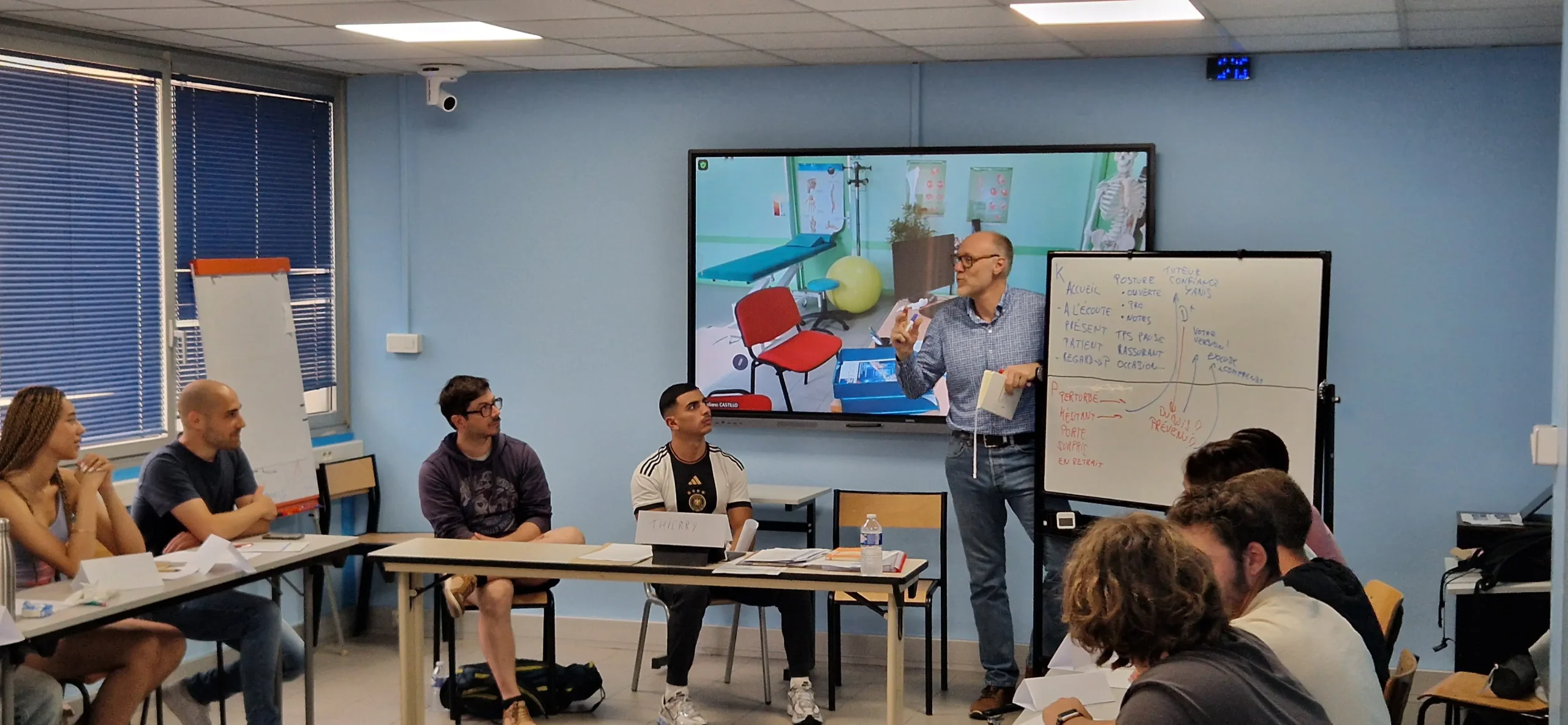
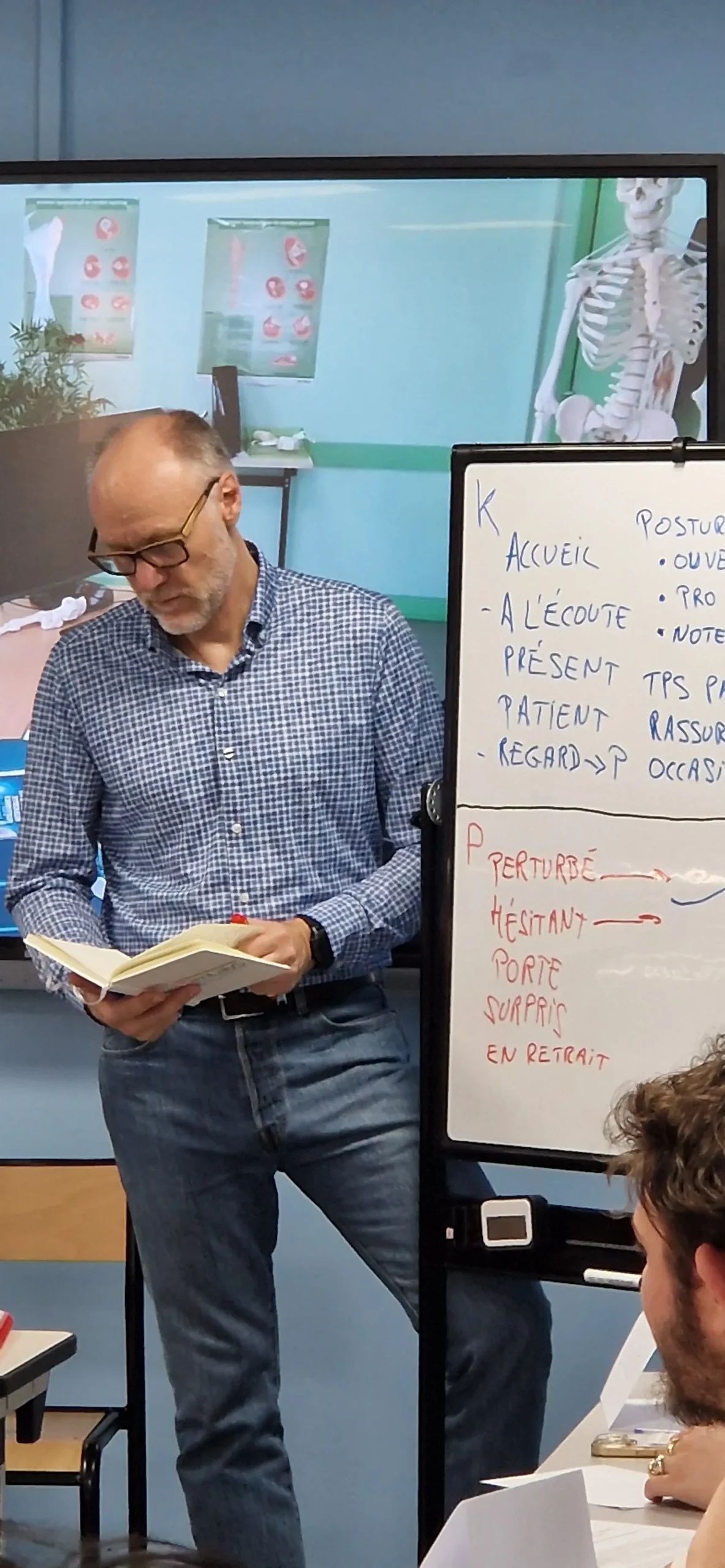
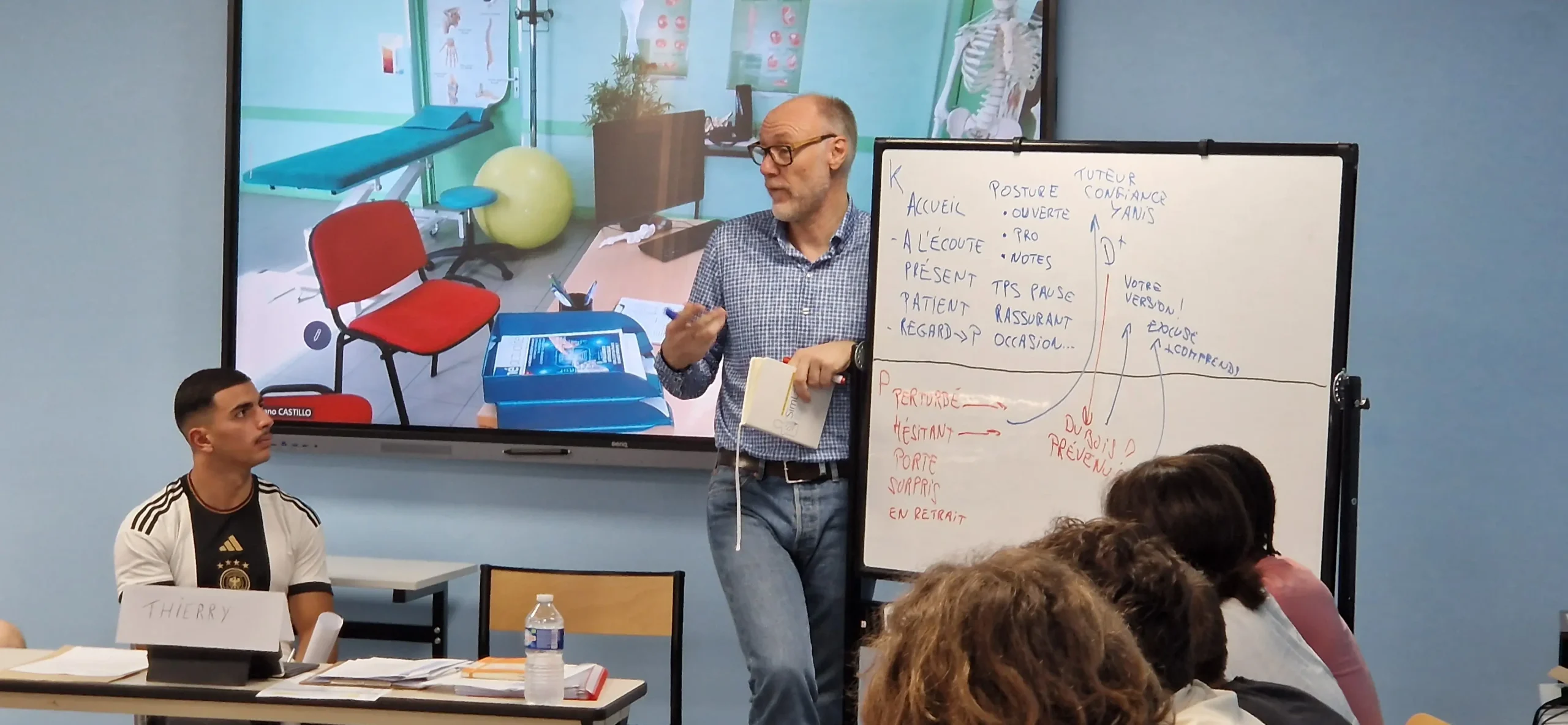
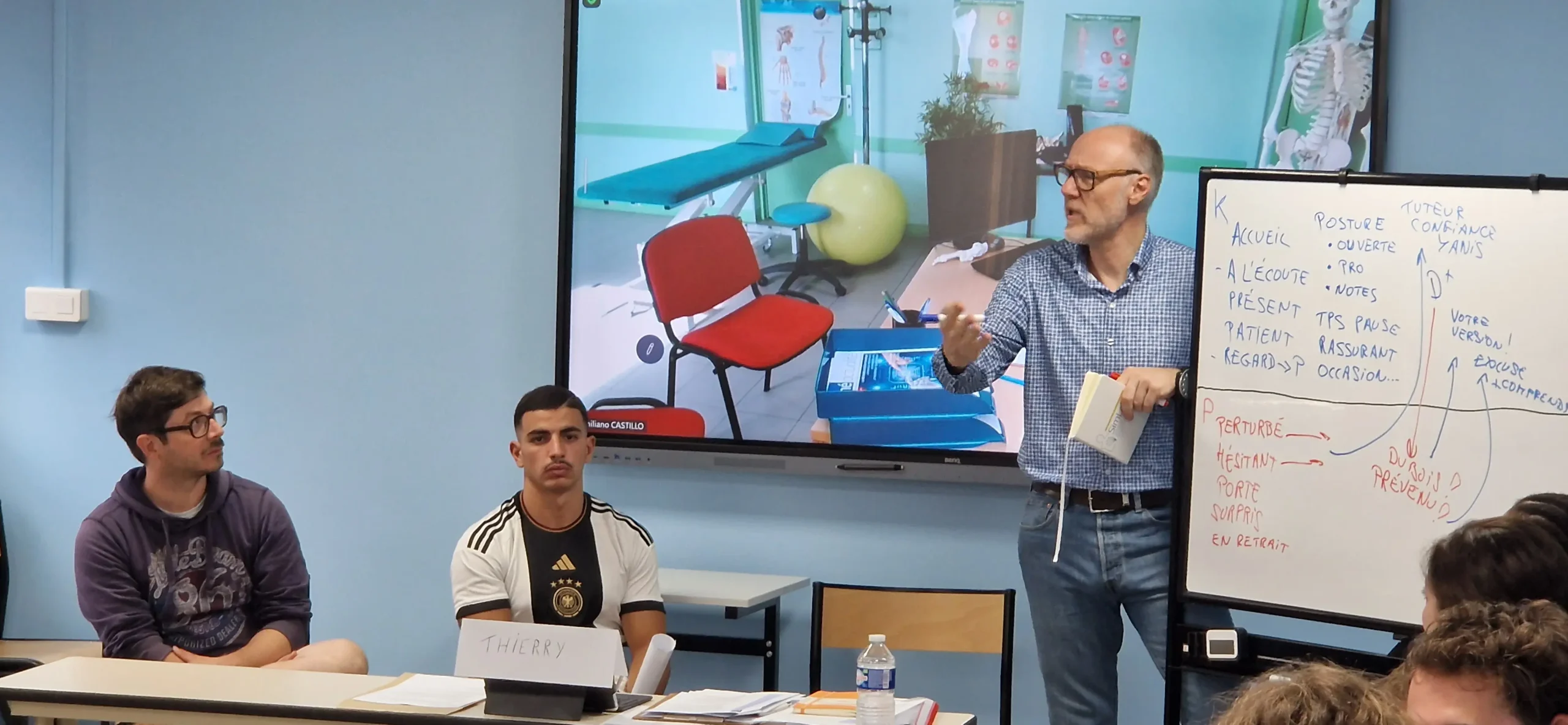
These immersive sessions offered our physiotherapy students the opportunity to experience full-scale clinical scenarios. In our modern, purpose-designed facilities—set up to replicate a private practice and equipped with audiovisual tools—a volunteer student took on the role of physiotherapist and interacted with an external actor playing the part of a patient. A variety of scenarios were explored, all focused on the essential theme of communication to build a therapeutic alliance and establish a safe, effective therapeutic framework.
Simulation-based education, widely recognised for its many benefits, provides a highly realistic environment with no risk to the patient. It encourages reflective practice and the transfer of learning to real-world clinical settings, enabling future professionals to develop key skills such as neutrality, empathy, compassion, and the ability to explore and respond to patient anxiety. Following the simulation role-plays, structured debriefing sessions served as formative assessments, offering concrete strategies for improving communication skills.
This innovative teaching approach reflects CEERRF’s continuous drive to enhance the quality of its training programmes by prioritising active learning and authentic assessment of competencies. It naturally builds on our integration of Objective Structured Clinical Examinations (OSCEs) across several teaching units, as well as our international collaboration with the Catholic University of Valencia and Dr Miryam Garcia Escudero, who has trained our faculty in the use of simulation and video analysis.
We extend our sincere thanks to Thierry Pastur for sharing his valuable expertise, to HELB for this successful collaboration, to the professional actors for their remarkable contribution, and especially to our volunteer students—true protagonists of their own learning—for their enthusiastic participation and engagement in this enriching experience. CEERRF thereby reinforces its commitment to preparing future healthcare professionals for the real-world challenges of clinical practice.