



Focus on our trainer : Maud TRAULLE
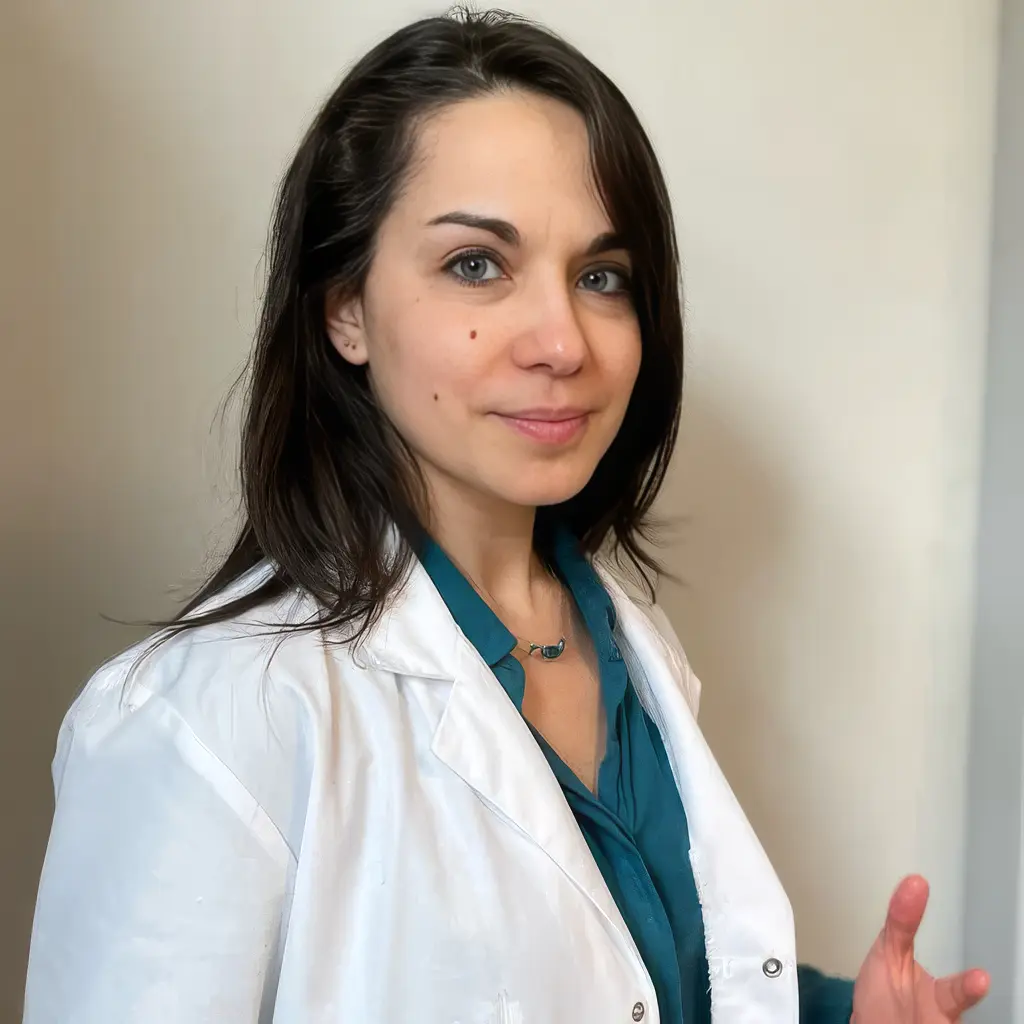
A licensed physical therapist for the past 10 years, Maud’s professional career is marked by a triple area of expertise: leadership of multidisciplinary teams, clinical specialization, and strong involvement in professional education and research.
Her academic background is rooted in a Master’s degree (Master II) in Health – Research and Healthcare Organization, complemented by several University Diplomas (Clinical Posturology, Neurorehabilitation of Movement, Clinical Research). These qualifications reinforce her initial clinical expertise—particularly in orthopedic and sports rehabilitation—and her ability to design care pathways based on up-to-date scientific recommendations.
After founding and managing a specialized paramedical center that integrated innovative technical platforms and developed functional assessment services, she transitioned toward management. She progressed into a supervisory role, where she is responsible for a multiprofessional department combining somatic and cognitive therapists.
At the same time, she has been actively committed to knowledge transfer as a lecturer in initial training programs since 2015 in various Institutes of Physiotherapy (IFMK), before joining CEERRF in 2023. The synergy between clinical care, management, and education firmly anchors her experience as a physical therapist within multiprofessional rehabilitation, ensuring high-quality patient care.
The heart of rehabilitation: a multiprofessional approach
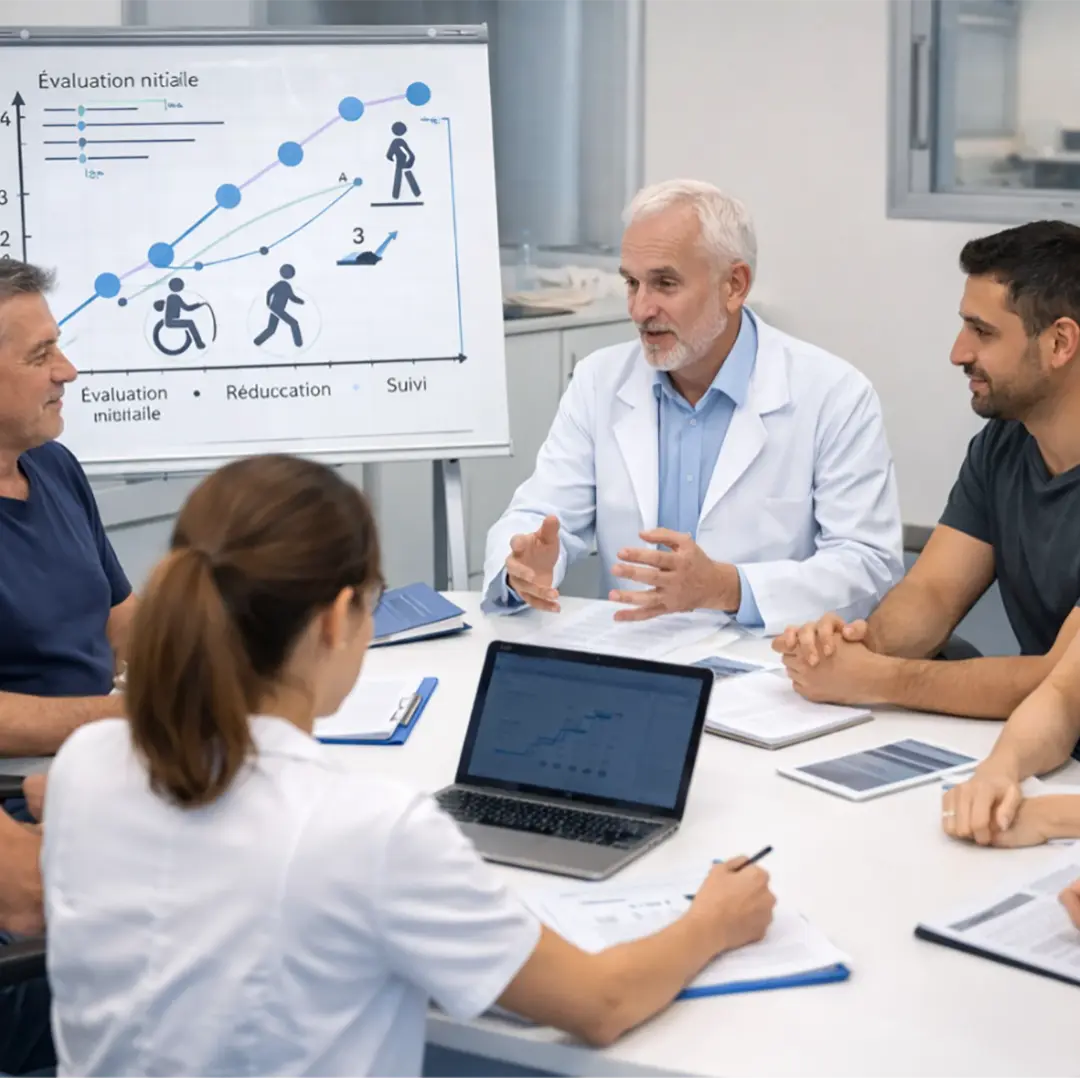
The success of a rehabilitation pathway within a Physical Medicine and Rehabilitation Service (PM&R / SMR) relies on the mobilization of a wide range of specialized professionals. Each contributes an essential element to the construction of functional recovery and patient autonomy through the development of a coherent and individualized Personalized Care Plan (PCP). This approach enables each professional to benefit from the expertise of others and from differing perspectives on disability-related impairments.
The team is coordinated by a PM&R physician, who leads multiprofessional meetings and defines targeted objectives for each practitioner, preventing redundancy of care and giving meaning to everyone’s involvement.
The Physical Therapist (PT) is often an immediate key player, focusing expertise on the rehabilitation of motor functions. The goal is to restore or compensate for mobility, muscle strength, and balance, preparing the patient for fundamental activities such as walking, standing up, and moving. The PT works on restoring overall physical capacity.
In parallel, the Occupational Therapist focuses on autonomy in activities of daily living and adaptation to the patient’s environment. They assess specific tasks (personal hygiene, dressing, meal preparation) and propose solutions, whether through targeted rehabilitation or the recommendation of assistive devices (wheelchairs, adapted utensils), in order to optimize quality of life and independence.
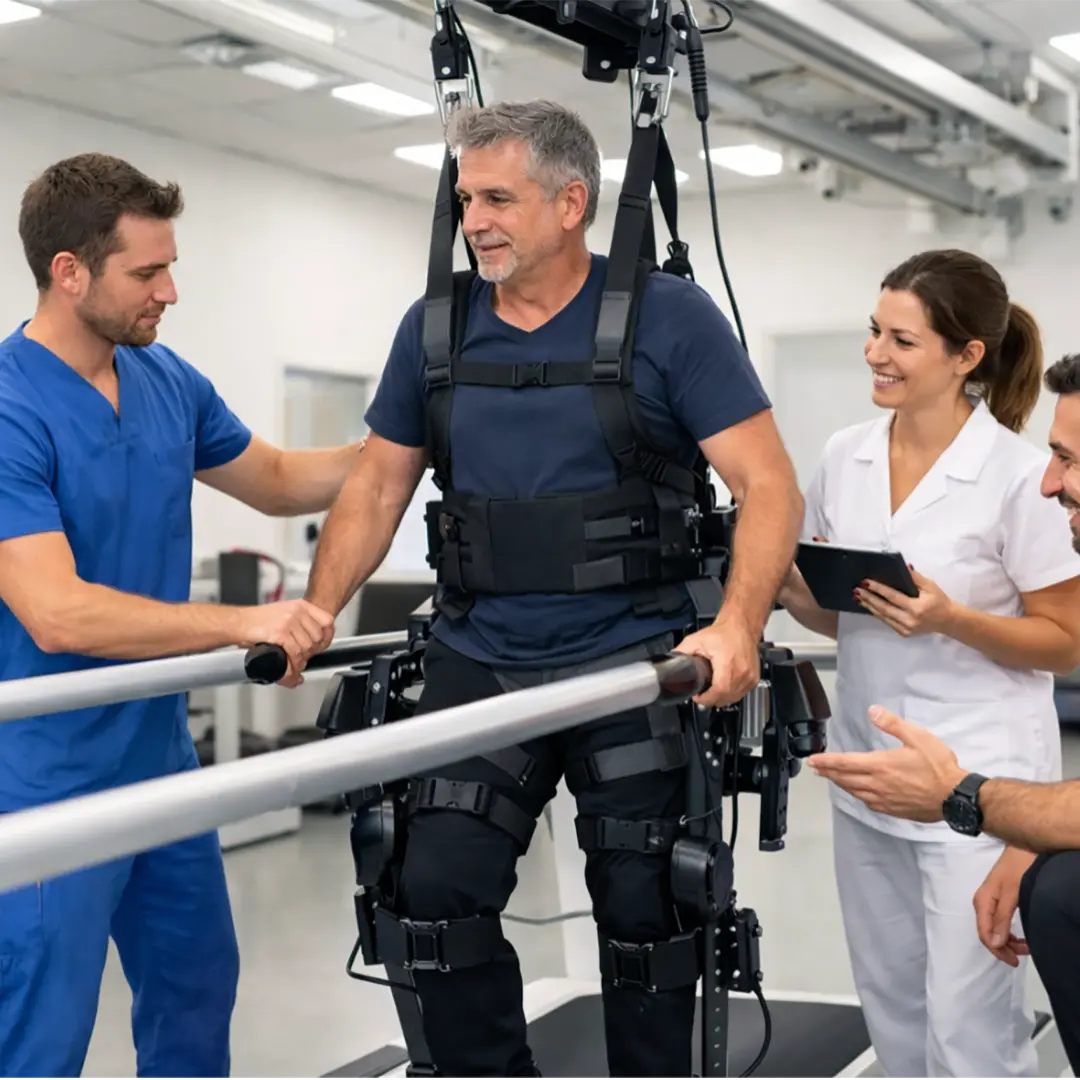
Posture and gait are addressed by the Podiatrist. While managing foot-related conditions, their role extends to assessing static and dynamic plantar mechanics. Through the design of custom-made orthopedic insoles (or footwear, for orthotists), they help prevent joint and skin complications and optimize gait patterns—an essential factor for effective motor rehabilitation.
The role of the Prosthetist-Orthotist is fundamental for patients requiring external devices, whether prostheses or orthoses. They design, manufacture, and adjust these devices on a custom basis. Close collaboration with the team is crucial, particularly with the PM&R physician, the Physical Therapist, and the Occupational Therapist, who are responsible for rehabilitation and daily use training of the equipment.
Communication and swallowing functions are managed by the Speech-Language Therapist. This specialist assesses and rehabilitates speech, language, and swallowing disorders. Following acquired brain injury, for example, their work is essential in enabling patients to regain safe communication and feeding abilities, particularly in preventing aspiration.
Psychological and cognitive aspects are addressed through two distinct areas of expertise: the Psychologist and the Neuropsychologist. The Psychologist provides crucial emotional and psychological support to patients and their families, assisting with acceptance of disability or illness and managing mood disorders. The Neuropsychologist evaluates and rehabilitates higher cognitive functions—such as memory, attention, and executive functions—affected by brain injury.
General health status and tissue recovery are also closely linked to nutrition, the domain of the Dietitian. They assess nutritional status, implement specific dietary plans (protein enrichment for wound healing, texture adaptation), and provide therapeutic education to ensure optimal energy intake, which is essential for the rehabilitation process.
With a focus on reintegration and prevention of sedentary behavior, the Adapted Physical Activity Instructor (APA Instructor) designs and leads safe physical activity programs. Tailored to residual abilities, these programs aim to improve overall physical condition, reduce the risk of secondary complications, and promote a return to an active lifestyle.
Finally, the Psychomotor Therapist focuses on rehabilitation through the body, working on the relationship between movement, emotions, and mental processes. They address psychomotor disorders such as coordination, body schema, and spatial-temporal organization, helping patients reconnect with their bodies and improve their interaction with the world.
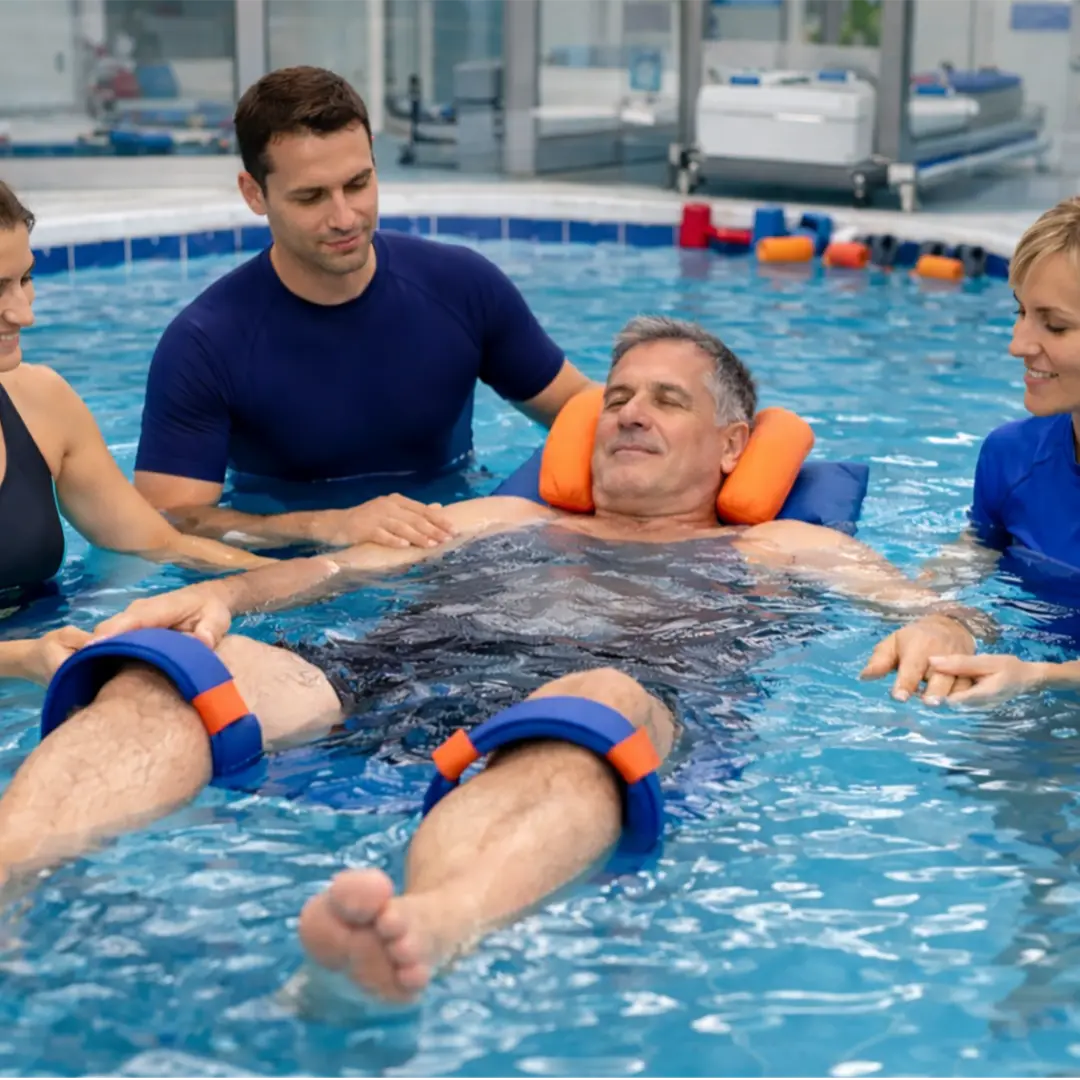
It is the interweaving of all these roles—from analytical movement to complex functional participation, through locomotion and psychological well-being—that defines the strength of the multiprofessional team. The multiprofessional model is the gold standard in rehabilitation. It enables not only maximal functional recovery but also optimal social and professional reintegration. Interprofessional communication and mutual recognition of expertise transform care into true teamwork, centered on the complex and evolving needs of the patient.